
Critical Fail Fish
Patrice curse to win.


"The house doesn't beat the player. It just gives him the opportunity to beat himself." — Nick the Greek
To Begin:
Read this quote out loud:
"A 10/10 bag isn't chaos—it’s a deterministic playground where every token has a job to do."
Mulligan Strategy: The “Critical Fail Fish” Patrice Hathaway
The term ‘Fish’ refers to the dual-intent of the deck: 1) ‘Fishing’ through a high-volume 5-card draw to find specific engine pieces, and 2) the ‘Fail-Forward’ nature of the build. We aren’t just fishing for tokens; we are ‘fishing’ for the specific failures (Curses/Auto-fails) that trigger Token of Faith and generate Blessing dividends for the team.
Patrice Hathaway’s ability to draw 5 cards every turn is a double-edged sword. Any card you cannot afford to play the turn you draw it is effectively lost to the discard pile. Therefore, your mulligan must prioritize establishing a resource and skill “floor” over keeping expensive power cards.
Primary Targets (Keep All Copies):
Patrice’s Violin: The absolute priority. Provides 0-action resource generation or card filtering. Without this, your economy will struggle to keep up with your draw rate.
Madame Labranche: Essential for your resource floor. She ensures you can always afford at least a 1-cost event or boost every turn, even if you spent your pool down to zero.
Cornered: Your primary mathematical bridge. Converts forced discards into +2 skill bonuses, allowing Patrice’s base 2 stats to compete with high-shroud or high-combat challenges before your engine is online.
Secondary Targets (Keep only if you have at least 2 of the above):
Token of Faith (Level 3): The namesake of the deck. Essential for the “fail-to-succeed” loop, but useless if you don’t have the economy to support the tests.
Keep Faith / Tempt Fate: These 0-cost or 2-cost events seed the bag with Blessings and Curses immediately, fueling your Paradoxical Covenant engine for later turns.
What to Throw Back (Even if they look good):
Breath of the Sleeper / Eyes of the Dreamer: These 3-cost assets are too expensive for Turn 1. Because Patrice cycles her deck every 8 turns, it is mathematically safer to throw these back and find them again once your Violin and Labranche are generating income.
Mulligan Logic:
Your success rate for finding at least one of the “Core Three” assets with a full 5-card mulligan is 74.3%. By aggressively fishing for economy, you stabilize your early game (Turns 1–4) so that you can dominate the late game (Turn 5+) with deterministic auto-successes.
Phase 1: The Setup (Turns 1–5)
In the first half of the game, your goal is to establish your economy and seed the chaos bag. Your teammates must cover the primary combat and investigation duties during this window.
Primary Actions:
Play Patrice’s Violin, Madame Labranche, and Cornered as soon as they appear.
Play Keep Faith or Tempt Fate to populate the bag with Blessings and Curses.
Secondary Actions:
Move toward the group or toward low-shroud (1–2) locations.
Only fight if an enemy is engaged with you and you have Spectral Razor or enough cards to pitch to Cornered for a +4 or +6 bonus.
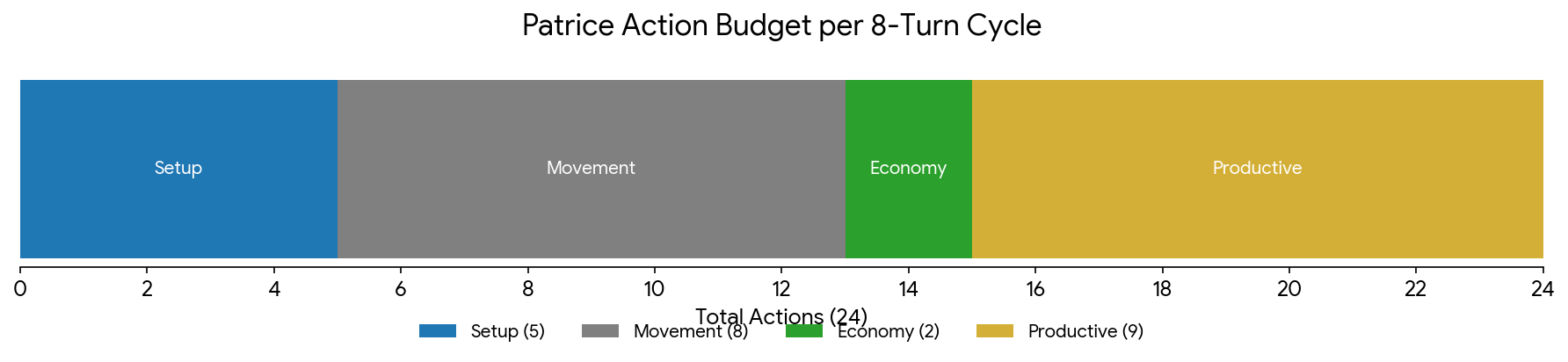
Aggressive Contribution: Patrice should never be idle during setup. Because you see 5 new cards every turn, your 'help' is about resource dumping. If you draw a card that you cannot play this turn, do not let it vanish in the upkeep phase. Commit it immediately to a teammate’s test or your own low-shroud investigation. You aren't just 'helping'; you are aggressively thinning your hand to ensure your next 5-card draw hits your economy assets faster.
Phase 2: The Carry (Turn 6+)
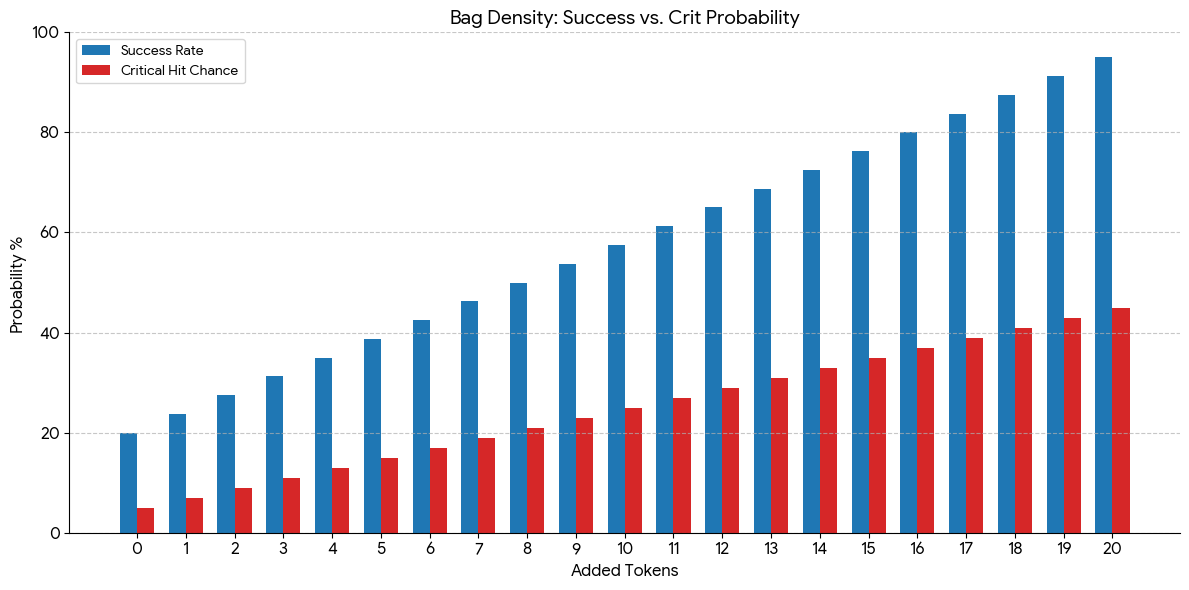
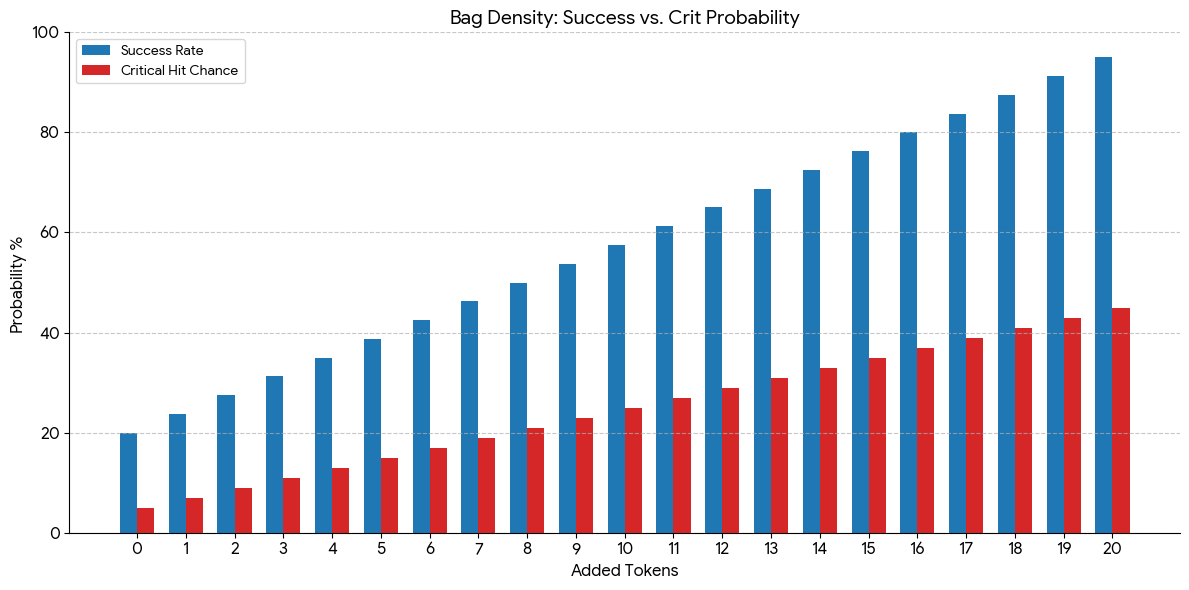
Once your assets are in play and the bag is dense (8+ added tokens), you shift to a deterministic “Auto-Success” machine.
Primary Actions:
Use Breath of the Sleeper with 3 charges and “Hit me!” to hunt for +2 damage “crits.”
Use Favor of the Sun/Moon to force Paradoxical Covenant triggers on high-difficulty tests (Difficulty 4+).
Use Token of Faith (Level 3) to “fish” for failures on low-stakes tests to flip Curses into Blessings.
Action Priority: Move > Fight/Investigate > Setup. By this stage, you should only spend actions on setup if you draw a replacement spell or a second Favor.
When to “Carry”: Take the most difficult tests on the board. Your Paradoxical Covenant doesn’t care about Patrice’s low stats or the Hard mode modifiers; use it to clear the boss or the 5-shroud location that your partners can’t touch.
"Just when you think you're playing your cards right, God shuffles the deck." — Mark Sheppard
1. The “Fail-Fish” Mechanic
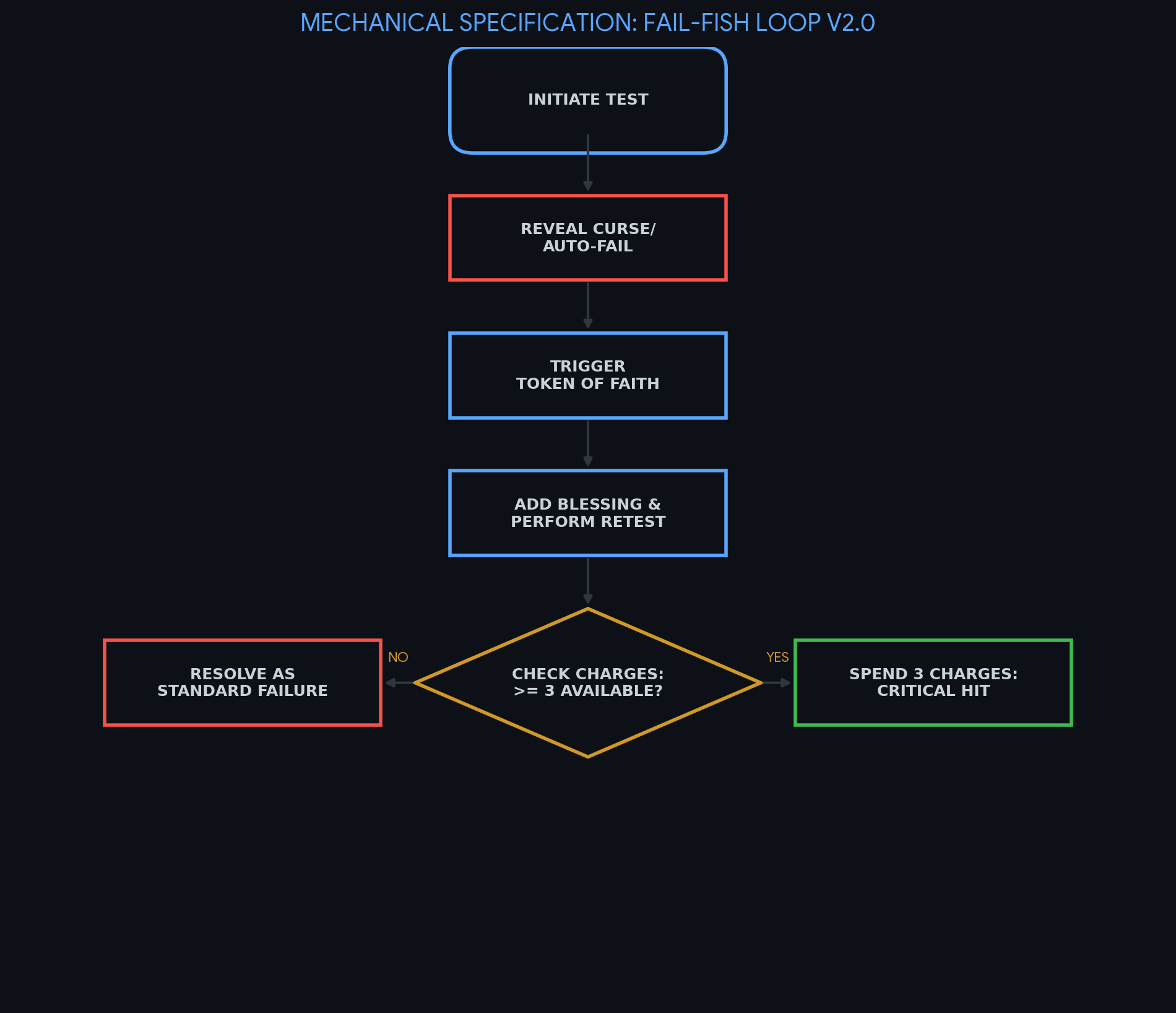
Your deck uses Token of Faith (Level 3) to turn failure into a resource.
The Loop: You initiate a test you expect to fail (e.g., a “0-charge” spell attack or a high-shroud investigation).
The Trigger: If you reveal a Curse (-2) or the Auto-fail, Token of Faith triggers.
The Payoff: You add a Bless (+2) to the bag and perform the test again. On the retest, you can now spend 3 charges on Breath of the Sleeper to go for a critical hit.
2. The “Crit” Math (Breath of the Sleeper)
Your primary damage comes from “matching” tokens. When you spend 3 charges to reveal 4 tokens (or 5 with “Hit me!”), you are hunting for duplicates.
Density is King: With 10 Curses in the bag, the probability of drawing at least two Curses in 5 reveals is ~68%.
The Bonus: If you resolve one Curse and ignore a second matching Curse, you deal +2 damage.
Favor of the Moon Synergy: By exhausting this card, you guarantee one of your revealed tokens is a Curse. Now you only need any one of your other 4 random draws to also be a Curse to secure the “crit.” This brings your +2 damage reliability to ~82%.
3. Taming the Tilted Bag
Your deck “tilts” the bag by flooding it with both Blessings and Curses.
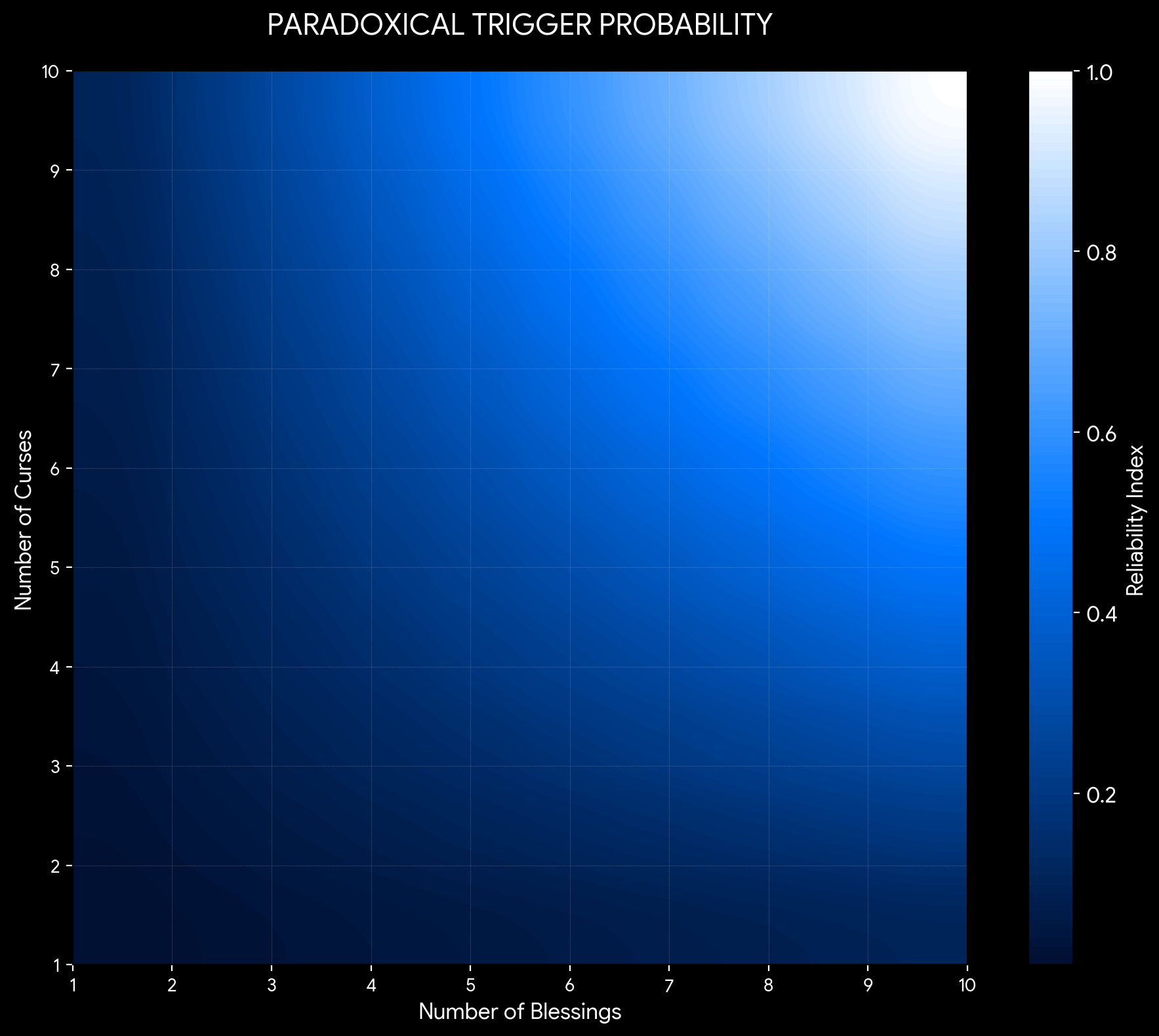
Paradoxical Covenant: This is your failsafe for when the bag is too chaotic. If you reveal at least one of each (Bless and Curse) in a single test, you automatically succeed.
Favor of the Sun/Moon: Use these to “plug in” the missing token. If you naturally draw a Curse, exhaust Favor of the Sun to resolve a Bless and trigger the auto-success instantly.
Mechanical Tip: Always resolve a Blessing or a Curse if it helps you pass or hit your “Crit” damage. Do not try to “clean” the bag; your teammates benefit from the +2 Blessings, and you need the Curses for your matching damage and Paradoxical Covenant triggers. A 10/10 bag state is your peak efficiency.
"I stayed up one night playing poker with tarot cards. I got a full house and four people died." — Steven Wright
Here is the mechanical breakdown of your specific “Critical Fail Fish” interactions and bag-state goals.
1. The Token of Faith “Add” Mechanic
Token of Faith (Level 3) does not “flip” or remove the token. It keeps the Curse or Auto-fail in the bag and adds a new Blessing to the bag before the retest.
The Result: The bag density increases. You are not removing negative tokens; you are diluting them with positive ones.
Retest Strategy: Because a retest is a completely new test instance, you can choose to spend 3 charges on Breath of the Sleeper during the second attempt, even if you spent zero on the first.
2. “Hit Me!” and the Curse Buff
The “+” Flip: When you play “Hit Me!”, you reveal a token and treat its “–” as a “+”. A Curse token (normally –2) effectively becomes a +2.
The Crit: If you resolve that “Hit Me!” Curse, it counts as a revealed Curse. If any of your other 4 ignored tokens was also a Curse, you deal the +2 damage bonus.
The Auto-Fail Clause: If “Hit Me!” reveals the Auto-fail, you automatically fail that specific token. However, because Breath of the Sleeper allows you to “ignore” tokens, you can simply choose to resolve one of the other 4 revealed tokens instead.
3. Paradoxical Covenant: Deterministic Success
Timing: You trigger Paradoxical Covenant after revealing all chaos tokens for the test.
The “I Win”: If you have revealed at least one Bless and one Curse, you exhaust the Covenant to automatically succeed.
The Auto-fail Interaction: Automatic success is a binary state. If you trigger the Covenant, it overrides the Auto-fail (-6/Standard) or any other negative modifier. You do not draw again; the test is simply successful.
4. Optimal Bag State: The 10/10 Goal
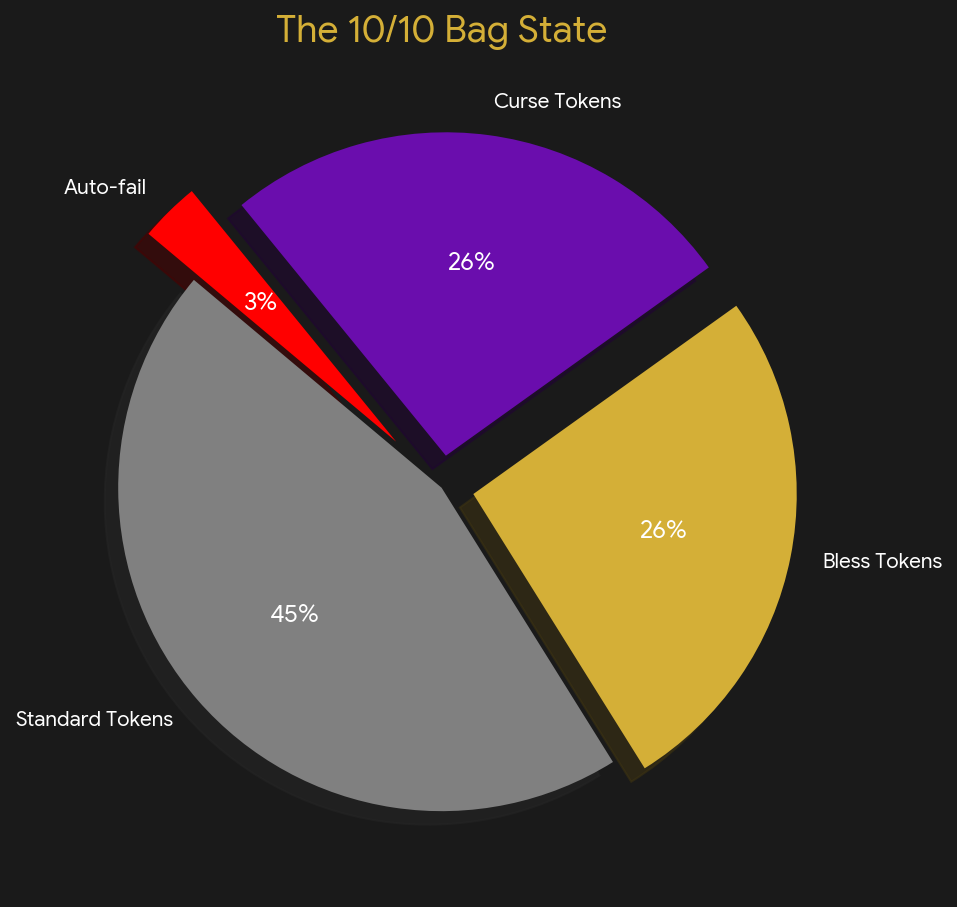
For this build, a balanced 10 Blessings and 10 Curses is the peak mechanical state.
Why Curses? Essential for Breath of the Sleeper matching damage and triggering Favor of the Moon.
Why Blessings? Required to trigger Paradoxical Covenant and provide a +2 math buffer for your teammates.
The Synergy: A 10/10 bag ensures that your Paradoxical Covenant is almost always “active” and your Breath of the Sleeper has a high probability of finding a match.
5. Favor of the Moon: Management
You do not “fetch” tokens from the bag mid-test. You Seal up to 3 Curses from the bag only when the card enters play.
The Cycle: Play the card
Seal 3 Curses
Spend them over 3 turns
Discard.
Patrice Advantage: Since you cycle your deck every ~8 turns, you will frequently redraw and replay Favor of the Moon, effectively “re-loading” your guaranteed Curses.
"A gambler never makes the same mistake twice. It's usually three or more times." — Terrence 'VP Pappy' Murphy
Advanced Synergies
Enraptured + Breath of the Sleeper: Use Paradoxical Covenant to guarantee success on an Enraptured test. This allows you to add charges back to your spell assets without needing to find a fresh copy.
Cornered + Winging It: Discard Winging It to Cornered for a +2 bonus. This places the card in your discard pile, allowing you to play it later for its reduced shroud/increased clue effect.
Madame Labranche + Patrice’s Violin: Discard a card to the Violin for a resource. If your hand is now empty, use Labranche to immediately draw a new card. This maximizes card flow and economy in a single window.
Token of Faith + Team Support: When a teammate reveals a Curse, use Token of Faith to give them a retest. This adds a Blessing to the bag, accelerating your progress toward a 10/10 state while protecting your team.
The Favor of the Moon “Fast” Window
You can play Favor of the Moon between the first failed attempt and the second retest attempt.
The Rule: Favor of the Moon is a “Fast” asset.
The Timing: After your first test fails and Token of Faith triggers the retest, a player window opens. You can play the Favor card now, seal Curses from the bag, and have them ready for the retest resolve.
Mechanical Summary: Maintain a 10/10 bag. Use Token of Faith to fail-forward, Favors to guarantee the Paradox/Crit, and “Hit Me!” to invert penalties into bonuses.
To keep your Critical Fail Fish engine running at peak mechanical efficiency, here are the tactical rules for your current game state:
. The Token of Faith (Level 3) Choice
Selfish vs. Support: You can trigger Token of Faith for any investigator at your location.
The Math: If a teammate fails and hits a Curse, you should usually trigger the retest for them. It adds a Bless to the bag, which increases the density for your future Paradoxical Covenant triggers.
The Exception: If you are holding Breath of the Sleeper and are low on Curses in the bag, you must prioritize your own tests. You need those Curses in the bag to hit your +2 damage match.
2. When to play “Hit me!”
The Static Buff: “Hit me!” is a +2 to +4 bonus that costs 0 actions. Because you discard your hand every turn, you should play it during any test where you are not already at the “guaranteed pass” threshold (+4 over difficulty).
The Bonus: Since it treats a Curse as a +2, it helps you pass while still counting as a “Curse” for your Breath of the Sleeper matching requirement.
3. Resource Equilibrium
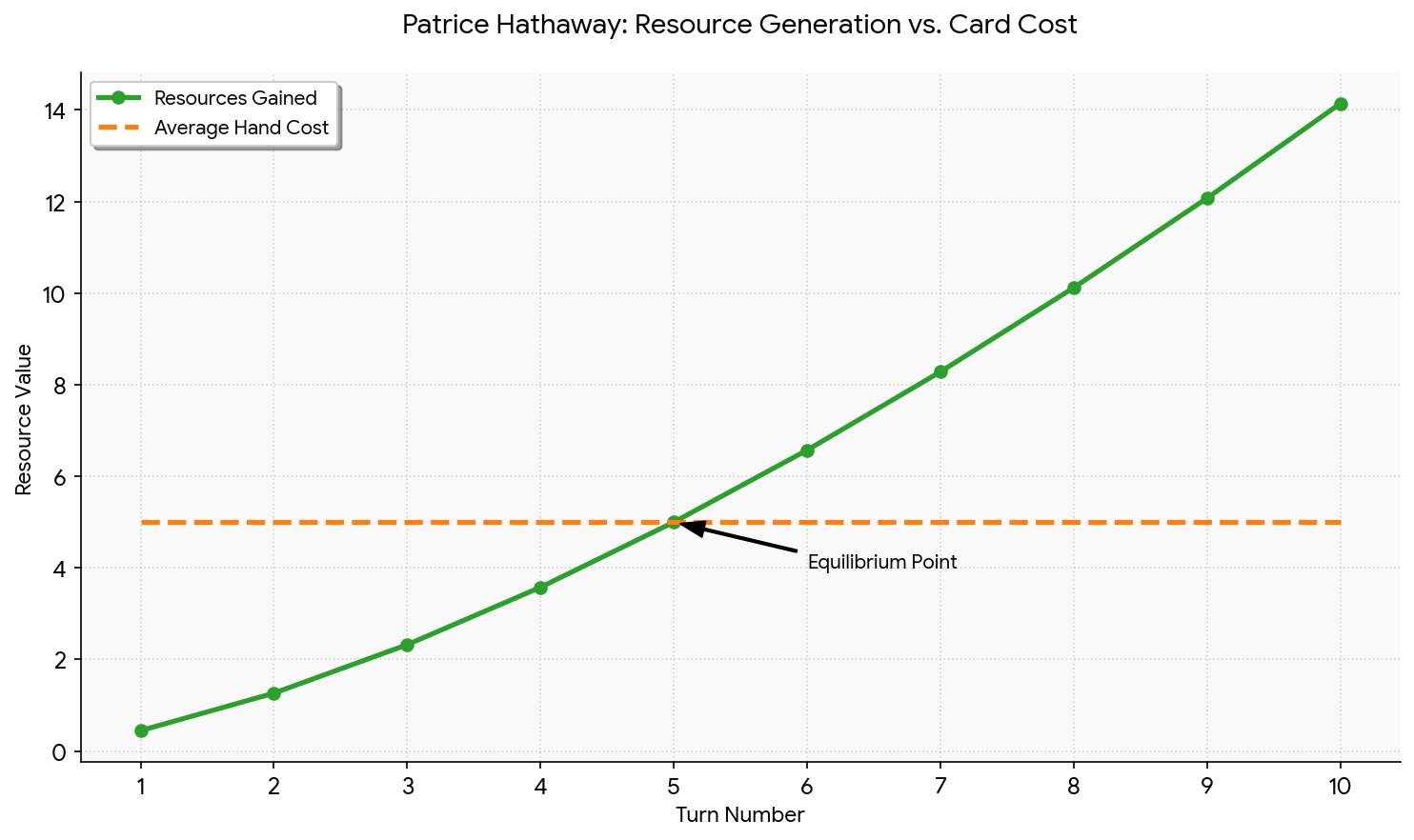
The 3-for-3 Trap: Your baseline is 3 resources in and ~3 resources out per turn.
The Shift: Your value increases because your setup costs disappear. In the first cycle (Turns 1–8), you spend resources on assets (Violin, Labranche). In the second cycle, you spend those same resources on impact events (Spectral Razor, “Hit me!”). You aren’t getting richer; you are getting more efficient.
4. Spending Charges: The “Importance” Rule
Standard Rule: If you are at a Difficulty 1–2 test, spend 0–1 charges. Use Cornered to boost yourself instead.
Retest Rule: If you are performing a Token of Faith retest, always spend 3 charges. You have already invested the “fail” to get here; you must ensure the second attempt deals maximum damage.
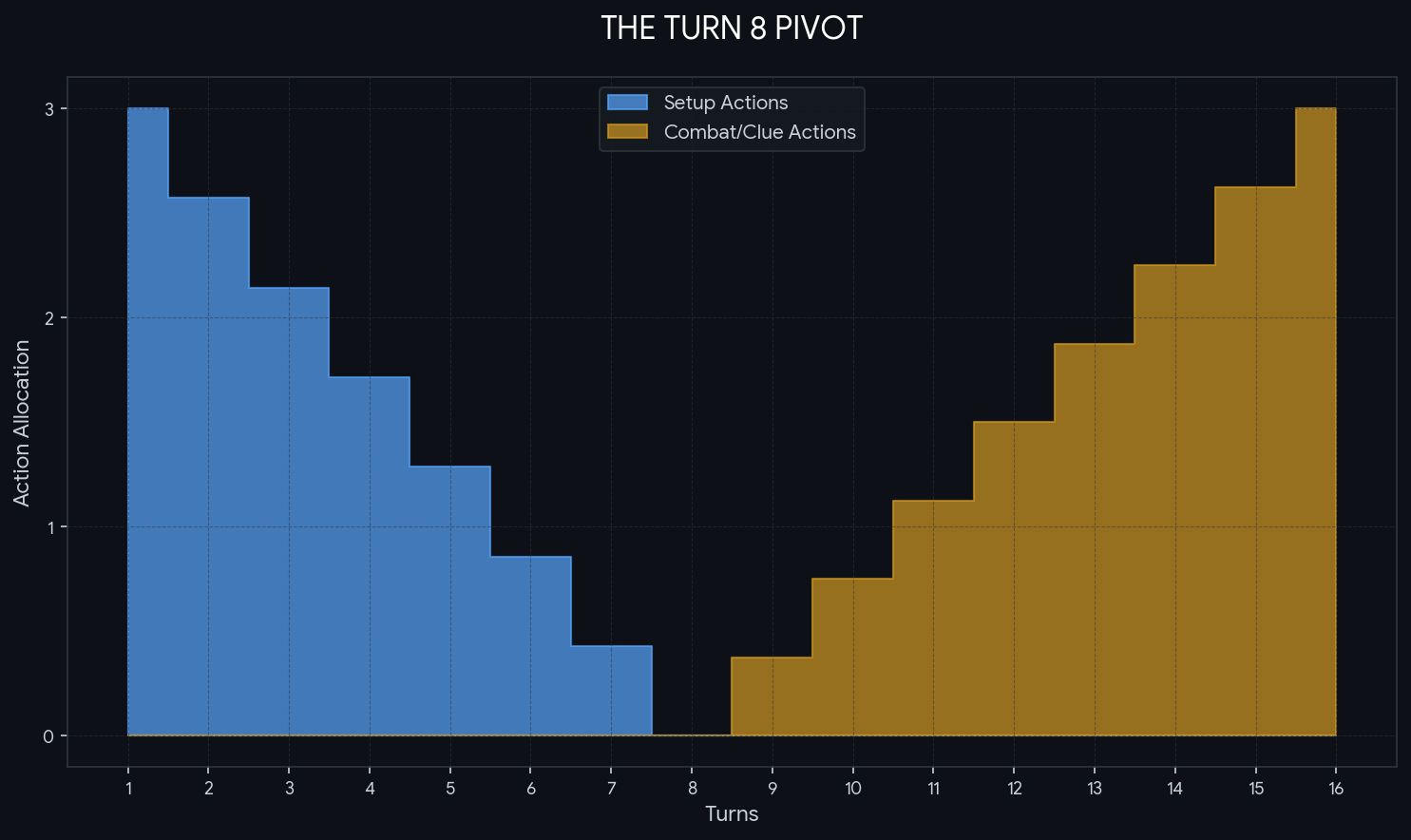
5. Setup Phase Pivot (Turn 8+)
Once you pass Turn 8, your “Setup” actions drop to nearly zero.
Mechanical Action: Use Favor of the Moon as a “battery.” If you have 3 resources and nothing to play, play a Favor. It stores those resources as future 1-resource payouts, effectively saving capital for a turn when you draw a 3-cost spell.
"Maybe you should try trying harder."
Action Quality (AQ): The Deterministic Ladder
Action Quality measures how much a single action advances the game state.
Low AQ (Base Stats): Testing at base 4 Willpower or 2 Combat. High fail rate on Hard mode. This is “rolling the dice.”
Medium AQ (Cornered / Hit me!): Boosting to +4 or +6 over the difficulty. This is your “Fair Play” mode for standard movement and low-shroud clues.
High AQ (Favor Crit Fishing): Using Favor of the Moon to guarantee a Curse for Breath of the Sleeper. This yields an ~82% “Crit” rate for 3+ damage.
Peak AQ (Paradoxical Covenant): Using Favors to “plug” a Bless/Curse pair. This is 100% AQ. The stats do not matter; the success is guaranteed. Save this for Elite enemies or 5-shroud locations.
Strategic Conclusion: The “Fail Fish” Life Cycle
Mulligan (The Foundation): Hard-fish for Patrice’s Violin, Madame Labranche, and Cornered. Throw back the 3-cost spells; they will return when your economy is ready.
Phase 1 (Turns 1–5): You are a “Token Farm.” Flood the bag with 10 Blessings and 10 Curses. Focus on establishing your assets and making the bag messy.
The Pivot (Turns 6–8): Your setup costs vanish. Shift resources from assets to Spectral Razors and 3-charge Critical Hits.
Phase 2 (Turn 9+): You are the “Deterministic Carry.” While your teammates’ resources dwindle, your 5-card-draw ensures you have a fresh hand of auto-successes and auto-crits every turn.
Final Rule: A 10/10 bag state is your peak efficiency. Always resolve a Blessing or a Curse if it helps you pass or hit your “Crit” damage. Do not try to “clean” the bag; your teammates benefit from the +2 Blessings, and you need the Curses for your matching damage and Paradoxical Covenant triggers.
Conclusion: You have built a deck that doesn’t “fish” for luck—it fishes for failures to fuel a machine of guaranteed successes. You are the safety net and the heavy hitter combined.
To End:
Read this out loud:
"If the bag is tilted toward the dark, just remember: every Curse we add is an auto-success waiting to happen."

❖ FINAL PROXIMITY WARNING
CAUTION: If the bag hits 10/10 density and your first Breath of the Sleeper test results in a Triple-Curse “Critical Hit,” please remain seated. The mathematical certainty of this deck may induce a temporary state of “Total Tabletop Mania.”
PROTOCOL: Under no circumstances should you declare “WE ARE ACTUALLY INSANE” while removing your trousers. Maintain a 2-stat composure. Arkham is a place of cosmic horror, but your local game store has a strict “Pants-On” policy. Resolve the damage, take your resource from the Violin, and stay in your seat. You have been warned.
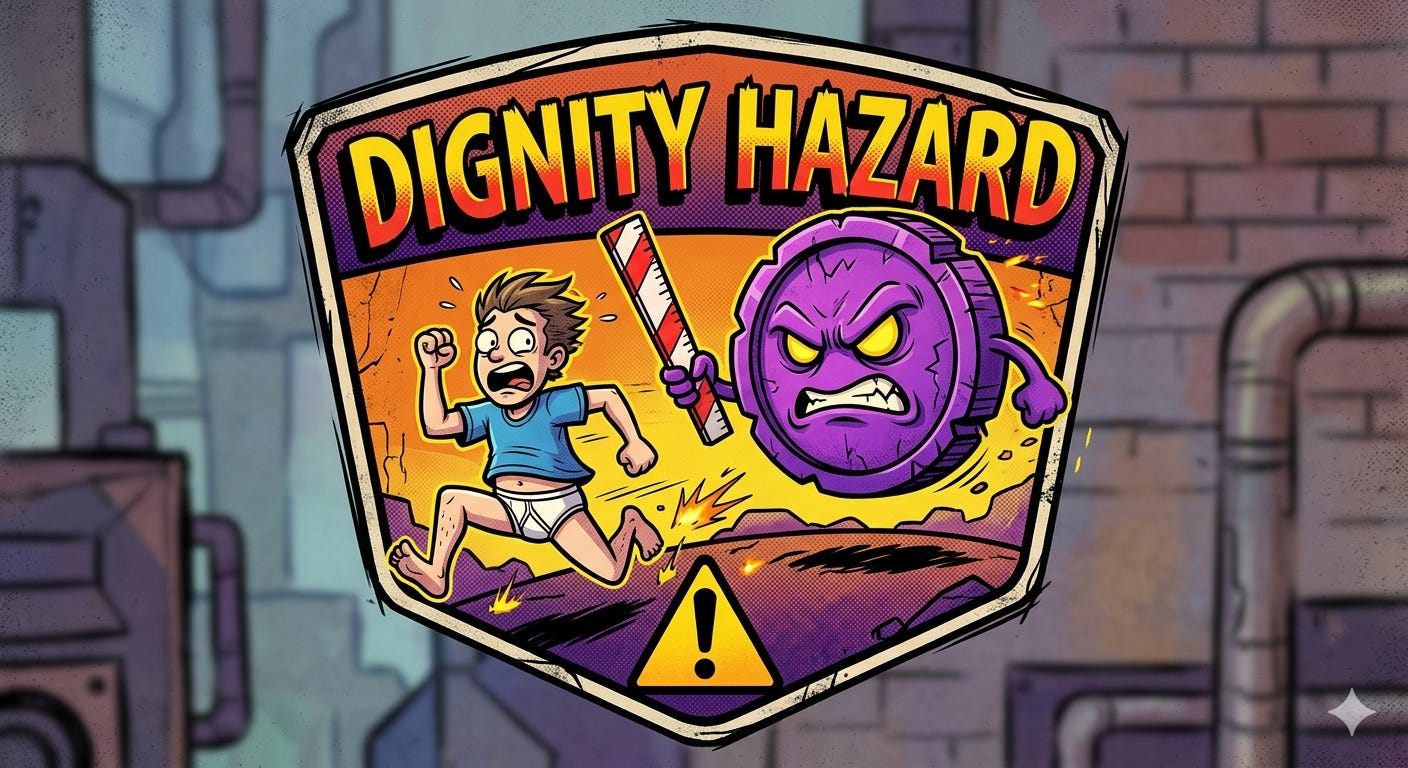
To provide the most direct answer, if you want to avoid specific teammates who will clash with this "Fail-Fish" Patrice, look out for these three investigators:
Sister Mary: She is your mechanical opposite. Mary's entire engine relies on adding and maintaining Blessings to trigger her abilities. While you add Blessings, you are also flooding the bag with Curses, which Mary specifically wants to avoid or remove to keep her "bag purity" high.
Father Mateo: Like Mary, Mateo is a Bless-focused investigator. His signature ability and unique cards often reward him for pulling the Elder Sign or Blessings. By "tilting" the bag toward a 10/10 state, you increase the noise and make it much harder for him to hit his specific triggers reliably.
Rex Murphy: Because of the latest Taboo List, Rex is highly sensitive to the chaos bag. His ability to gain extra clues triggers only if he succeeds by 2 or more. If he constantly pulls your Curses (-2), his efficiency drops significantly. He needs a "clean" bag to hit his success thresholds, and your 10/10 bag is the definition of "unclean"
The Steelman Critique
The primary risk of the “Critical Fail Fish” strategy lies in its extreme Action Inefficiency during the first five turns. In a high-tempo Hard mode scenario, the requirement to spend five specific setup actions on assets like the Violin and Cornered—while also needing to move and defend—creates a significant "tempo debt." If the scenario presents a high-shroud location or an Elite enemy before Turn 5, this deck lacks the immediate stat-line to respond, potentially forcing teammates to over-extend and exhaust their own resources just to keep Patrice in the game. Furthermore, the reliance on Favor of the Moon and Token of Faith creates a finite "ammunition" problem; since Patrice cannot recharge these Pacts, a long-duration scenario may see the engine stall out during the final act once the deck’s second cycle is exhausted.
Disclosure and Licensing
Please be advised that the strategic analysis, deck-building math, and visual assets included in this article were generated by an AI chatbot. These outputs—including the "7.5 out of 10" non-realistic cartoon thumbnails and all technical text—are provided as free-use material under United States law. As AI-generated content does not currently hold individual copyright under USCO standards, you are free to share, adapt, and redistribute this content for your own Arkham Horror: TCG community guides or personal play-groups without restriction.